

NetSuite implementations are about to undergo the biggest shift the ERP world has seen in twenty years. AI will no longer sit on top of the system as an assistant. It will sit inside the implementation lifecycle itself,reshaping design, configuration, data migration, testing, training, and post go-live stabilization.
This coming change isn’t theoretical. Early signals are already here: automated requirements extraction, AI-driven process mapping, generative configuration, agentic testing, and dynamic training models personalized to each user. Within the next 12–18 months, these won’t be cutting-edge,they will be expected.
If your organization is planning a NetSuite implementation or reimplementation, this is the moment to prepare for AI in NetSuite. Early adopters will see dramatically faster deployments, cleaner systems, lower cost of ownership, and fewer post go-live issues. Below is what’s coming,and why you want to be ahead of it.
Request More Info About How AI Is Transforming NetSuite Implementations
AI Will Redefine the NetSuite Implementation Lifecycle
Traditional ERP projects are people-heavy, documentation-heavy, and slow. AI is about to compress timelines and remove friction at every step.
1. AI-Driven Requirements Gathering
Instead of manual interviews and weeks of documentation, AI will allow:
process documents, SOPs, existing systems and logs, emails and workflows and automatically generate first-draft requirements. Consultants will refine, not create from scratch, accelerating projects by weeks.
2. Automated Process Discovery and Mapping
Process maps will no longer be whiteboard artifacts. AI will generate:
live process maps, optimization suggestions, identification of bottlenecks and comparisons against NetSuite best practices. This will define how future Fit-Gap sessions are run
3. Generative Configuration for Core Modules
We will see AI agents capable of:
configuring common modules, creating saved searches and reports, proposing workflows and approval chains and validating configurations against best practices. Consultants shift from “builders” to “validators and strategists.”
4. Smarter, Faster Data Migration
Data migration remains the pain point of any NetSuite implementation. AI will transform it by:
cleaning and normalizing data, deduplicating records, identifying and correcting structural issues and applying standardized NetSuite-ready schemas automatically. Expect migration timelines to shrink by 50–60 percent.
5. Autonomous Testing
AI agents will perform continuous testing across:
role permissions, customizations, workflows, integrations andtransaction flows. They will run tests 24/7 and report errors before users ever see them.
6. Personalized Training at Scale
Instead of static training, AI models inside NetSuite will deliver:
individually tailored learning paths, contextual help based on the user’s actual behavior, role-based simulations and performance monitoring and recommendations. Training becomes ongoing, adaptive, and self-correcting.
AI Will Also Reinvent Integrations and Customizations
Integrations and custom solutions often represent the most complex and unpredictable aspect of any NetSuite implementation. AI is about to simplify this dramatically by reshaping how systems connect, how data moves, and how custom logic is generated.
AI-enhanced integration design will fundamentally change how technical architects plan and deploy integration frameworks. Instead of manually reviewing logs, API schemas, and historical workflows, AI models will analyze system behavior end-to-end and recommend the most efficient integration structure.
This includes identifying redundant data flows, highlighting unnecessary handoffs, and proposing an optimized architecture for tools like Boomi, Celigo, SuiteTalk, and SuiteQL. The result is faster design cycles, cleaner and more resilient integrations, and a substantial reduction in post go-live errors or rework.

On the customization side, AI will elevate how SuiteScript and SuiteFlow are developed. Rather than coding every script or workflow from scratch, developers will increasingly rely on AI-generated drafts that follow best practices and reflect the organization’s functional requirements.
AI will be able to produce SuiteScript 2.x templates, generate custom records, propose user events and scheduled script logic, and build the initial structure for approval workflows or complex automations. Developers shift from writing code line-by-line to validating, refining, and optimizing AI-generated logic.
This evolution reduces the backlog of customization requests, accelerates delivery timelines, and minimizes the risk of human error. It also creates a cleaner, more maintainable system architecture,something that becomes essential once businesses begin layering AI agents, autonomous workflows, and predictive monitoring on top of NetSuite.
AI-driven integrations and customizations will not eliminate the need for expert developers or solution architects. Instead, they will elevate their role, allowing teams to focus on strategic system design and long-term scalability rather than repetitive build tasks.
The organizations that adopt these AI-enabled development patterns first will see the most significant benefits in cost, time-to-value, and overall NetSuite performance.
AI Will Transform Post Go-Live Optimization and Continuous Improvement
Most NetSuite projects do not fail at go-live, they fail six months after, when adoption drops, issues compound, and teams cannot keep up with optimization. AI will change that.
Self-Diagnosing Systems
Your NetSuite environment will soon:
detect broken workflows, present explanations for performance issues, identify unused custom fields or scripts and notify you of data inconsistencies recommend optimizations. Your ERP will tell you what is wrong and how to fix it.
Predictive Support and Ticket Reduction
AI will:
detect recurring user errors, prevent certain issues before they occur, provide auto-resolved solutions for common requests and reduce support tickets dramatically. Support shifts from reactive to preventive.
Continuous Process Optimization
AI will monitor:
transaction volume patterns, approval cycle delays, fulfillment bottlenecks, billing cycle anomalies and will propose optimization actions monthly or even weekly. ERP optimization becomes a continuous, AI-driven cycle.
Why Early Movers Will Win
Organizations that adopt AI-driven implementation models early will see immediate benefit,and outsized long-term advantage.
1. Faster, Cheaper Deployments
AI cuts dozens of hours across requirements, configuration, testing, and data cleanup. That translates into lower cost, a quicker go-live, and fewer risks along the way.
2. Cleaner System Architecture
AI eliminates configuration drift, unnecessary customizations, and misaligned processes. You start on NetSuite with the system your business should have,not what was easiest to build under deadline pressure.
3. Stronger Long-Term ROI
AI-driven implementations reduce: technical debt, post go-live support issues and rework and reconfiguration cycles You get a NetSuite environment optimized for AI from day one.
4. Competitive Pressure Is Coming
Vendors, partners, and customers will begin requiring AI-enabled efficiency.
AI adoption will not happen in isolation. As more organizations embed AI into their finance, operations, and customer workflows, expectations across entire ecosystems will rise. Vendors, partners, and customers will increasingly assume faster turnaround times, real-time visibility, and proactive communication as the baseline, not differentiators.
If your NetSuite implementation relies on manual handoffs, rigid workflows, or slow integrations, the friction becomes visible very quickly. Onboarding new customers takes longer. Vendor setup drags. Billing cycles stall. Exception handling requires emails, spreadsheets, and follow-ups that AI-enabled organizations no longer need. In these moments, your business becomes the bottleneck in an otherwise automated chain.
This has real commercial consequences. Partners prioritize companies that are easier to work with. Customers gravitate toward vendors who respond faster, invoice accurately, and resolve issues proactively.
Procurement teams increasingly evaluate operational maturity alongside price and product, and AI-enabled efficiency is becoming part of that evaluation.
Organizations running AI-driven ERP environments will close faster, adapt faster, and respond to change in real time. Those without will spend more time explaining delays, managing exceptions, and catching up. Over time, that gap compounds, turning implementation quality into a competitive advantage, or a competitive liability.
Companies with AI-driven ERP setups will outperform and out-respond those without.
Why GURUS Solutions Is Leading the Shift
The shift to AI-first implementations will not be solved with traditional ERP approaches. It requires NetSuite expertise, AI orchestration, systems integration experience, and real-world business process design. GURUS is already building toward this future:
-
AI Agents built specifically for NetSuite
-
Data readiness accelerators
-
Automated testing frameworks
-
Predictive issue detection
-
AI-driven project documentation
-
Contextual training tools
-
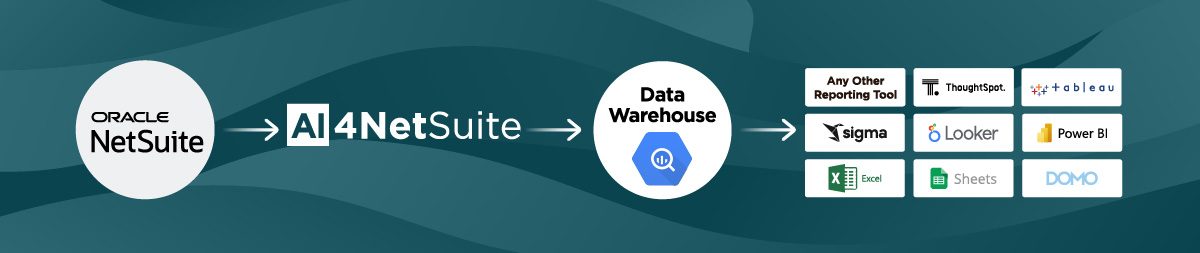
AI4NetSuite (your all-in-one AI integration framework)
Instead of waiting for the future, you can deploy a modern implementation model now.
If You Are Planning a NetSuite Implementation in the Near Future, You Cannot Afford to Delay
The way NetSuite is implemented is changing permanently. Businesses that move early will operate faster, scale smarter, and build an AI-ready foundation. Those that wait will spend more time, more budget, and more effort,only to compete against organizations who completed their implementations in half the time with better outcomes.
FAQ on How AI Is Transforming NetSuite Implementations
Q: How will AI change the way NetSuite implementations are delivered?
A: AI will automate major implementation steps, including requirements gathering, process mapping, data cleanup, testing, integration design, and training. Projects will be faster, cleaner, and more accurate from day one.
Q: Will AI replace NetSuite consultants or developers?
A: No. AI will automate technical and documentation-heavy tasks, but consultants and developers will still provide strategy, validation, architecture, and governance. Their work becomes higher-value and more efficient.
Q: Can AI speed up data migration during a NetSuite implementation?
A: Yes. AI can normalize, cleanse, and structure data while detecting duplicates, errors, and mapping inconsistencies. This significantly reduces migration time and minimizes post go-live issues.
Q: Can existing NetSuite implementations adopt AI without reimplementing?
A: Yes. AI4NetSuite and similar AI frameworks can be layered onto existing NetSuite environments. However, companies with cleaner setups or recent optimizations will see stronger results.
Q: How do AI agents support NetSuite implementations?
A: AI agents can monitor configuration quality, run test cycles, identify workflow failures, and recommend optimizations. Post go-live, they help stabilize the system by catching issues early.
Q: Why should businesses adopt AI-driven implementation methods now?
A: Organizations that implement NetSuite using AI today will go live faster, reduce technical debt, and start with an AI-ready configuration. Those who wait will operate slower and lose competitive ground.
Q: Is AI safe to use during a NetSuite implementation?
A: AI is safe when governance is applied. This includes human validation, audit trails, thresholds for automated actions, and controlled environments. With proper guardrails, AI reduces risk rather than increases it.
Get Started with GURUS AI 4NetSuite