

NetSuite AI isn’t evolving in one direction, it is evolving in dozens. Across every sector, specialized AI Agents are emerging that can understand industry workflows, identify anomalies unique to your vertical, and automate tasks that once required experts. And the businesses that move first will gain an advantage that late adopters may never catch up to.
This blog outlines our prediction: industry-specific NetSuite AI is the next major shift, and companies that prepare now will run faster, smarter, and more profitably than competitors still relying on manual processes.
If you want your business to be AI-ready before your industry changes around you, now is the moment to act.
Why Industry-Specific NetSuite AI Is the Next Big Shift
General AI tools were the beginning. NetSuite AI Agents mark the real transformation, agents that observe, decide, and act across your ERP. Now, the next wave is clear: verticalized AI agents built for the workflows that define your industry.
These agents combine NetSuite data, historical patterns, and industry logic to perform specialized tasks that generic ERP automation cannot. They behave like junior analysts who understand your business model, not just your data tables.
Businesses that ignore this shift risk being slower, less responsive, and less competitive than companies embracing industry-trained AI.
For a full breakdown of the AI landscape in NetSuite, read our complete guide: The 2026 Guide to AI in NetSuite
Request More Info About How NetSuite AI Will Transform Your Industry
Industry Example #1: Manufacturing & ETO
1. Automated Supply Chain Exception Management
Manufacturers deal with purchase delays, supplier risk, and operational bottlenecks daily. AI Agents will proactively monitor lead times, detect late POs, and draft mitigation plans, long before planners discover the issue manually.
2. Predictive Production Forecasts
Agents will refresh demand models continuously, factoring seasonality, backlog, yields, and constraints.
3. AI-Driven Engineering Change Oversight
AI can track version changes, identify SKU conflicts, and ensure nothing breaks downstream.
Industry Example #2: Professional Services & SaaS
1. Revenue Leakage Prevention Agents
AI monitors billing rules, project burn, and contract terms, then flags when revenue is at risk.
2. Intelligent Resource Allocation
Agents review skills, availability, PTO, and margin targets to suggest optimal staffing.
3. Client Health Scoring
NetSuite CRM + project data becomes an early-warning system for churn or upsell opportunities.
This is where services firms will win or lose client relationships.
Industry Example #3: Wholesale Distribution & Retail
1. Real-Time Inventory Health Agents
AI tracks item velocity, stock pressure, incoming shipments, and aging inventory, then tells you what to reorder, discount, or bundle.
2. Automated Supplier Performance Reviews
Late shipments? Incorrect fills? AI agents will detect patterns and draft scorecards automatically.
3. Customer Experience Agents
Agents manage delivery notifications, track-package workflows, and even predict returns.
Retailers with AI-powered operational awareness will outperform those relying on spreadsheets.
Industry Example #4: Financial Services & Payments
1. Continuous Reconciliation & Variance Detection
AI Agents monitor GL activity, bank feeds, gateway data, and transaction patterns, and draft corrections in real time.
2. Compliance & Audit Automation
Agents can prepare documentation, trace entries, and detect anomalies that violate controls.
3. Dynamic Cash-Flow Optimization
Autonomous forecasting Agents update projections daily and highlight liquidity risk.
For financial organizations, vertical AI becomes a compliance multiplier and a strategic advantage.
Why This Matters: Your Clients and Partners Will Expect AI
Industries are evolving quickly. As your partners, suppliers, and customers adopt their own AI workflows, they will push these expectations outward.
Meaning: If your business cannot meet AI-driven turnaround times, insights, or reporting standards, you will lose opportunities to competitors who can.
This is no longer optional, it is becoming part of the vendor selection process. Companies that start preparing for AI in NetSuite today will be the ones that keep and win business tomorrow.
How to Prepare Your Business for Industry-Specific NetSuite AI
Here’s the roadmap leading companies are following:
- Clean and Prepare Your NetSuite Data
Industry agents rely on structured, reliable information. Clean data = exponentially better outcomes. - Modernize Workflows and Integrations
Replace brittle scripts and rigid workflows that will break once agents enter the picture. - Introduce Your First Vertical AI Agent
Start small, forecasting, collections, supply chain monitoring, cancellations, anomalies, etc. - Build Scalable AI Governance
Define approval flows, visibility, audit trails, and human-in-the-middle oversight. - Level Up With AI4NetSuite
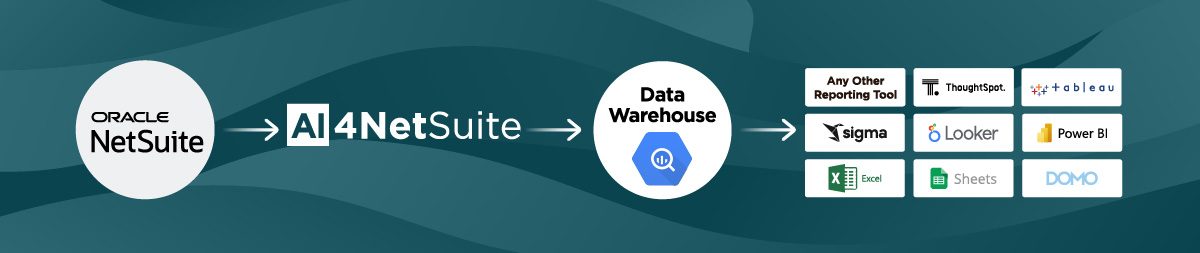
Our AI4NetSuite framework accelerates all the above, giving your team agent-ready infrastructure.
Be first to unlock industry-specific NetSuite AI. Contact us today.
Get Started with GURUS AI 4NetSuite